Choose your Track
At the Circular Society Conference 2026, participants choose one track to follow for the entire day, enabling deeper exploration, shared understanding, and meaningful connections with others who share your interests.
Each track consists out of two parts. In the Exploration Session a societal stakeholder and a researcher will share their contributions to circularity, discuss knowledge gaps, and collaboratively refine questions to create a shared map of opportunities for impact. In the Focus Session, we’ll refine and prioritize input from the exploration tracks, highlighting the most impactful issues and shaping a shortlist of topics ready for action.
Track 1: Informed and Sustainable Decision Making in Surgery
This track has unfortunaly been cancelled due to unforseen circumstances. Our apologies.
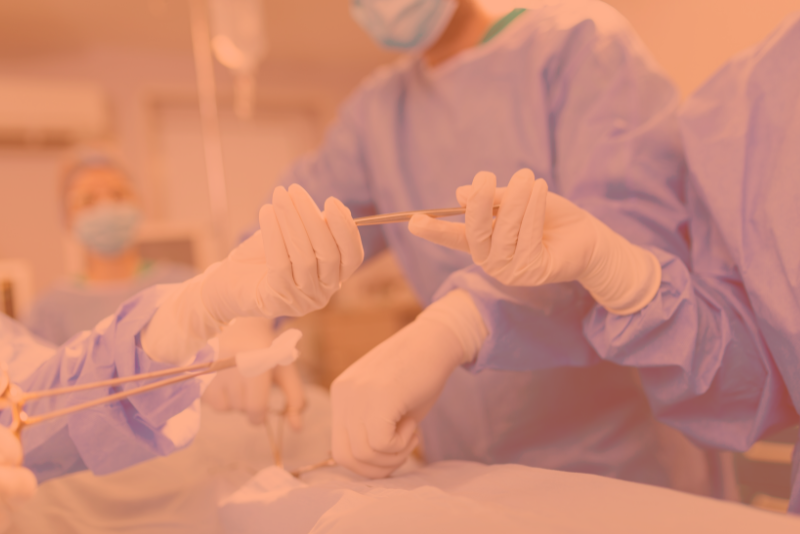
Track 2: Lifecycle Choices for Medical Devices - Rethinking medical products in healthcare and assessing possibilities for application of low-impact materials from renewable sources
Speakers:
Leendert‑Jan Doornbos UMC Utrecht
Dr. Rian Ruhl Wageningen University & Research
Dr. Shanmugam Thiyagarajan Wageningen University & Research
According to the Organization for Economic Co-operation and Development, the Dutch healthcare system ranks among the best worldwide in terms of access, equity and clinical outcomes. At the same time, healthcare in the Netherlands accounts for approximately 13% of national material use and 4% of total waste streams. The high use of especially disposable products, produced in low-wage countries also leads to other risks: hospitals are increasingly facing problems in the supply of medical products, even incidentally leading to surgeries being cancelled. Reducing the material use of healthcare without compromising quality of care can therefore be seen as both an ecological as well as a societal priority.
The Dutch University Medical Centers, united in UMC NL (formerly NFU), developed a shortlist of 22 high-impact medical disposables with strong reduction potential containing recommendations for R-strategies per product to reduce the impact. For a number of products research and/or redesign is recommended.
This tracks focus is on opportunities for research, redesign and adoption of circular medical products in clinical practice.
Track 3: Tackling the Housing Crisis with Fast and Circular Concepts

The Netherlands is under pressure to solve a major housing shortage. But how can we accelerate construction without compromising sustainability?
In this breakout session, we explore the powerful intersection of speed and circularity. While many current approaches focus on scaling up and speeding up building processes, circular construction is often overlooked, despite its potential to do both. Think modular building, bio-based materials, and design for disassembly: solutions that not only reduce environmental impact but can also streamline construction. We will have special attention for how digital tools like AI, data platforms, and digital twins can unlock smarter collaboration, faster decision-making, and more efficient planning.
Join us to co-create bold, interdisciplinary ideas that tackle fragmented data, complex regulations, and supply chain challenges and help shape the future of fast, circular housing in the Utrecht Region.
Speakers:
Johan Boterenbrood Gemeente Utrecht
Thijs van Bemmel ROM Utrecht
Torsten Schröder Eindhoven University of Technology
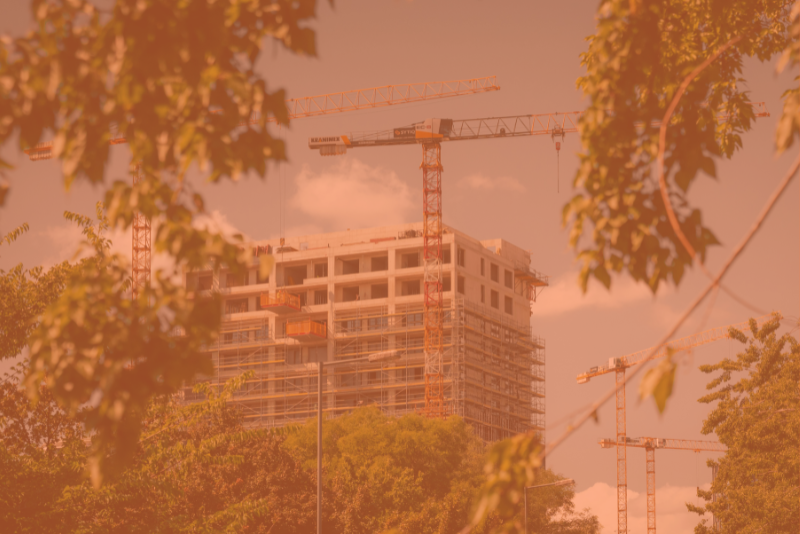
Track 4: Mapping and Recovery of Critical Materials for Circular Construction
Speakers:
Ira Gosselink Provincie Utrecht
Dr. ir. Sultan Çetin ROM Utrecht Region
Pieter Pauwels Eindhoven University of Technology
In an era of geopolitical tension, climate disruption, and fragile global markets, how can we ensure reliable access to the materials and services our societies depend on? This track explores the urgent need to strengthen supply chain resilience through greater transparency and circular thinking. Focusing on sectors like construction, where dependency on critical materials is high, we’ll examine how better insight into material flows and supplier networks can reduce vulnerabilities and support smarter, more sustainable decision-making.
Discover how circular strategies such as reuse, remanufacturing, and local sourcing can decrease reliance on scarce resources, while digital innovations, like data pipelines, material flow analysis, and risk dashboards, unlock new levels of understanding and control.
Join us to co-create interdisciplinary solutions that help governments and industries build secure, future-proof, and circular supply systems.
This conference is brought to your by the Institute 4 a Circular Society - Part of the EWUU Alliance

Circular Society Co-Creation Event 2026
 Registration website for Circular Society Co-Creation Event 2026
Circular Society Co-Creation Event 2026i4cs@ewuu.nl
Circular Society Co-Creation Event 2026i4cs@ewuu.nlhttps://event.wur.nl/171353
2026-06-08
2026-06-08
OfflineEventAttendanceMode
EventScheduled
Circular Society Co-Creation Event 2026Circular Society Co-Creation Event 20260.00EUROnlineOnly2019-01-01T00:00:00Z
To be announcedTo be announced